Key Elements: Cinematography

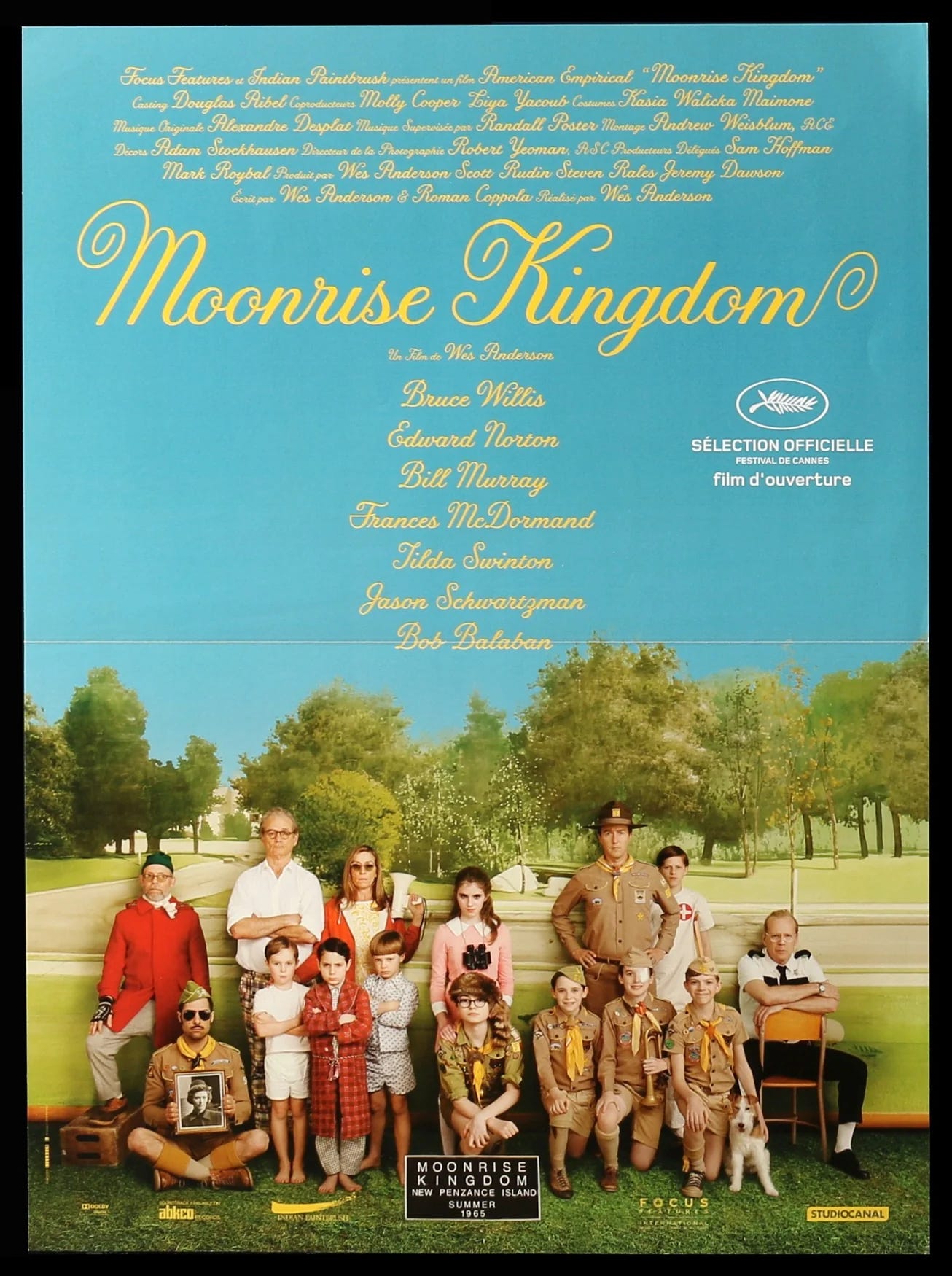
In the film, Moonrise Kingdom (Wes Anderson, 2012), a wide range of film techniques are used to convey different messages, for example cinematography. Cinematography is the ‘deliberate and considered use of photography and lighting’. Once again,it is an example of how ‘everything is artifice’ which we can also infer whilst watching the first 8 minutes of this film. Wes Anderson’s (the director of the film) cinematography techniques are quite distinctive to his works and there are many similarities between his movies.
Shot 1
The film begins with a close up shot of a picture on the wall. The picture almost fills up the frame of the shot and it is centrally framed and symetrically composed. This draws out attention to the picture and makes sure we are focused on it. The camera then crabs to the right and stops at the top of the stairs. The close up shot has now turned into a wide shot, showing the top of the stairs and the landing. A little boy then enters the frame. The camera then crabs to the right again to show the location of the next room. It is once again centrally framed and symmetrically composed and the boy again enter the frame. The camera then does a 90 degree wip pan to the next location in the house and another character enters the frame, rather than here being a cut to the next shot. There is another 90 degree wip pan to a fourth location, and another new character enters the frame. She almost fills the frame when picking something up before she leaves the frame. Alll the shots so far have been symetrical composed and centerally framed, making the audience focus on exactly what was intended. As well as that, there only being one shot implies that all the characters are connected, and it introduces us to the characters as well.
Shot 2
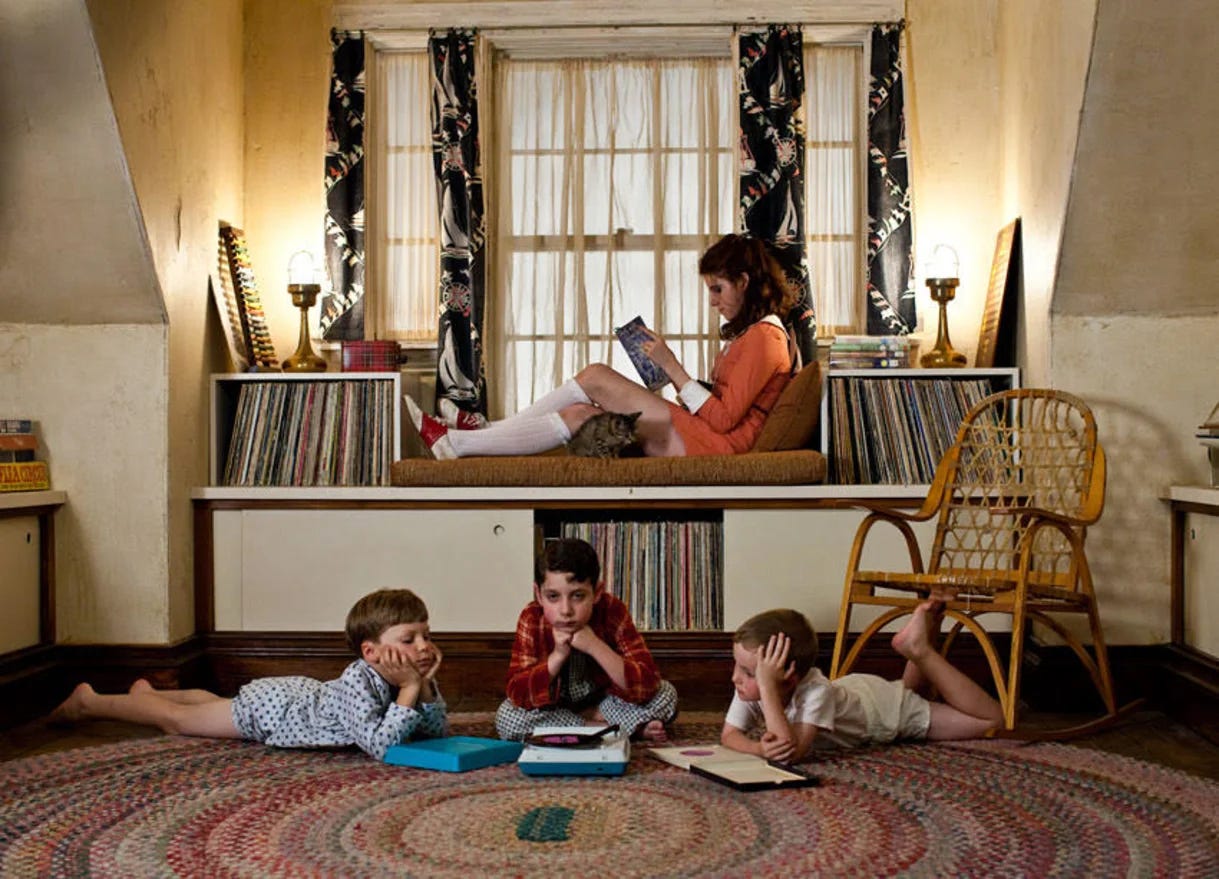
After the first 1 min and 46 seconds, there the first cut of the film and it cuts back to the play room. The three children (supposedly brothers) are symetrically framed on the floor listening to a type of documentary. The girl (most likely their sister) enters the frame and its down in the middle, drawing the viewers eyes towards her. This once again makes sure the audience is focusing on what is intended.
Shot 3
The camera then cuts to a profile close up of the girl sitting down and reading a book. The camera focusing on the girl reading suggests that she likes to read, and judging by the book, that she likes to read adventure fiction. This shows how the camera shot is already getting the audience to infer and learn things about the characters, without any dialogue or information being readily given.
Shot 4
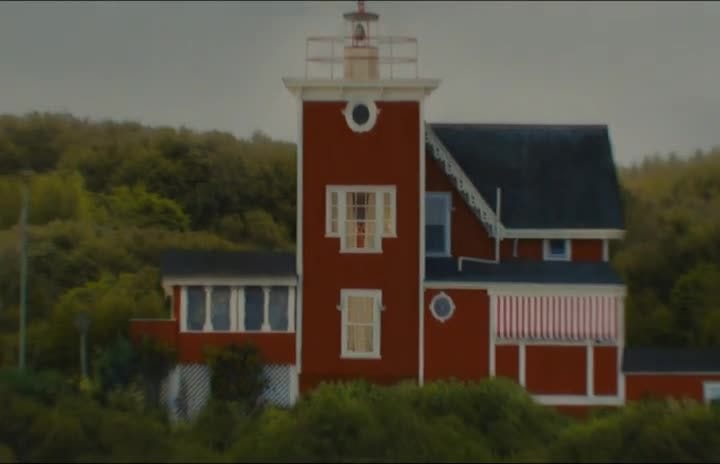
The audience then sees a close up of the girl looking out through a window in her house. Then we see a zoom out of a picture of her house and an extreme long shot of the house on the island. Zooms, however, are not very common in many films because it can be quite jarring and could make the film loose its realism.
Shot 5
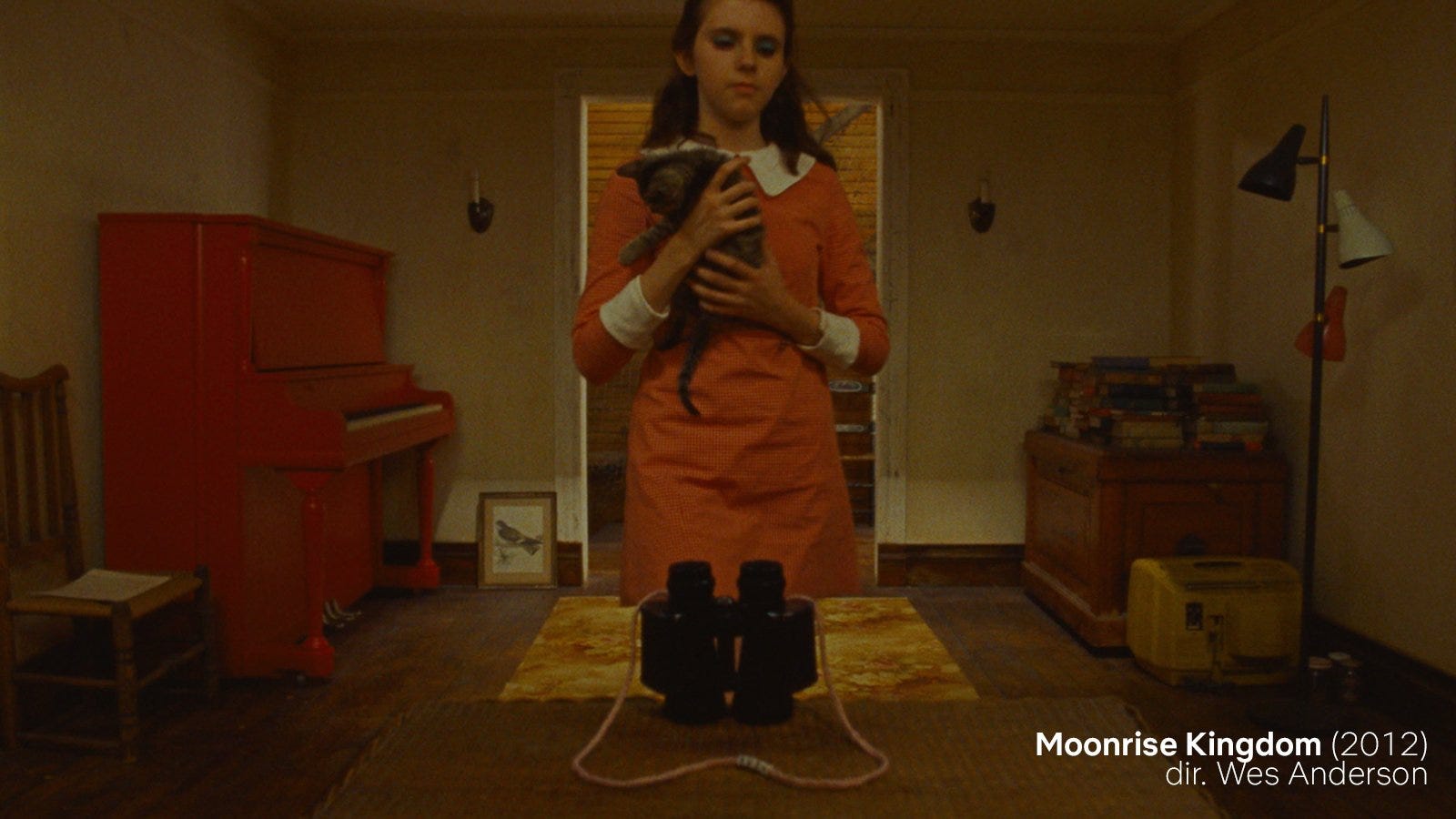
The camera then cuts back to a lengthy wide shot of the brothers playing a game. The camera then crabs to the right and the shot becomes a long shot of another room in the house. The camera then continues to crab to the right to a close up of the girl looking directly into the camera through her binoculars. This is called breaking the fourth wall.
Shot 6
The camera then cuts to a wide shot of a character (probably the dad) in a different room and the camera then crabs to the left. It then becomes a long shot of the Hall and the stairs with children entering the frame. The camera continues to crab to the left till we see a wide shot of a woman (probably the mum) washing up. The camera then comes to rest to an almost identical shot of the girl staring at us through her binoculars.
Shot 7
There is then a cut to a wide shot of the brothers playing table tennis and the camera then pedestals up to have a wide shot of the attic.
Shot 8
There is then a cut to a low angle shot looking up at the girl on to of the lighthouse. This makes the audience assume that the girl is the main character.